NCDA Statement of Concern – WHO Joint Task Force on Global Health Architecture Reform
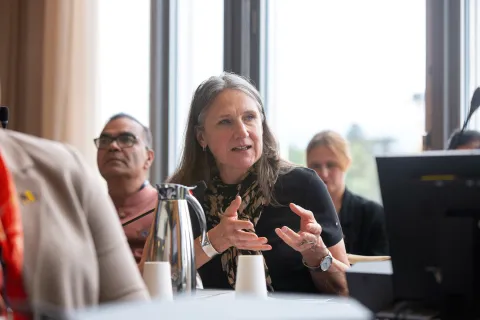
In a statement attributable to Alison Cox, Policy and Advocacy Director at the NCD Alliance, NCDA responds to today’s decision by Member States at the 79th World Health Assembly to exclude civil society and people with lived experience from the Joint WHO Task Force that will oversee reform of the global health architecture:
“By excluding civil society and people living with NCDs from the joint task force set up to oversee this process, Member States are sidelining the voices of those most affected and undermining meaningful, community-centred governance.
The absence of civil society and impacted communities from the body that will steer this process, removes a critical force for accountability, equity, and real-world impact, principles that many Member States themselves called for today. Civil society and impacted communities must play a central role not only in shaping the reform process itself, but also in the governance structures that emerge from it. Sustainable and equitable health reform cannot be achieved without the expertise, accountability, and lived experience that impacted communities bring.
Today’s decision also stands in contradiction to the commitments of Member States made through the WHA Resolution 77.2 on social participation for Universal Health Coverage, Health and Well-being. In that resolution, governments committed to ‘striving to ensure that social participation influences transparent decision-making for health across the policy cycle, at all levels of the system’. Today, they have fallen short of that commitment, leaving civil society to be consulted from the margins rather than included at the main table — not even in an observer's capacity.
If governments fail to seize the opportunity presented by global health architecture reform to build a more equitable, integrated, and people-centred system, they will be failing billions of people living with or at risk of NCDs including mental health and neurological conditions. The world can no longer afford a fragmented and inadequate response to NCDs. It is well past time to deliver on commitments and turn the tide of NCDs.”
Having begun her career with environmental campaigning organisations including Greenpeace International, Alison went on to lead strategy development and direct advocacy for global public health alliances: for the Framework Convention Alliance, bringing the civil society to voice to the WHO treaty on tobacco control, and in the early years of the NCD Alliance (2011-12) leading on Rio+20 advocacy to ensure NCDs were recognised in what became the SDGs, and on developing our first strategy. As Prevention Director at Cancer Research UK (2013-21), she led successful national campaigns for restrictions on tobacco and junk food marketing, and built an international programme to support tobacco control advocacy in LMICs. In 2021, as Policy & Research Director for the Global Climate & Health Alliance, she coordinated the delivery to the global climate summit, COP26, of the Healthy Climate Prescription from organisations representing 46 million health professionals worldwide.