World Health Summit discussion highlights need for equitable, continuous access to diabetes and obesity care
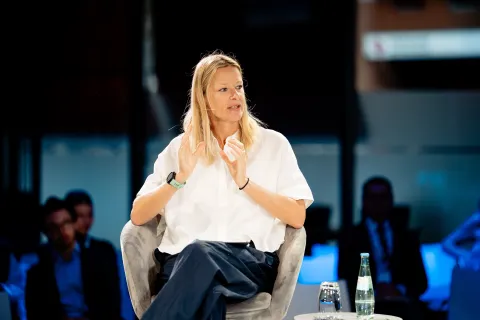
Against a backdrop of constrained health budgets and rapid developments in diabetes and obesity treatments, stakeholders at the World Health Summit in Berlin explored how to translate medical innovation into affordable, holistic care, prioritising efforts to address persistent gaps in access to essential medicines and diagnostics.
Co-hosted by NCD Alliance and Novo Nordisk, the session, Rethinking Equitable Access to Obesity and Diabetes Care, brought together perspectives from WHO, civil society, people with lived experience, the pharmaceutical industry and the Global Fund to Fight AIDS, Tuberculosis and Malaria.
Moderated by NCD Alliance CEO Katie Dain, the discussion examined the partnerships, financing and health systems needed to deliver equitable access, with a focus on low- and middle-income countries (LMICs). It also considered priorities for the 2027 UN High-Level Meeting on Universal Health Coverage (UHC HLM).
“People with noncommunicable diseases (NCDs) need uninterrupted, reliable access to quality-assured and affordable medicines and health products, often for long periods of time if not their whole life," said Dain. "However, in many LMICs access to NCD treatment and care remains a luxury for a few, rather than a right for all.”
Bridging gaps in essential care
In his opening keynote, Dr Søren Brostrøm, WHO Director for NCDs and Mental Health, highlighted persistent inequities in diabetes care. While treatment options have advanced, "we need to go back to basics", said Brostrøm, as many people still lack access to insulin, essential medicines and the tools needed to monitor their blood glucose and manage their condition.
He described metformin as the mainstay of type 2 diabetes treatment but noted that many people also need other established medicines that remain less available and more expensive.
“Even there, already, talking about old established treatments, we have a huge inequity globally for type 2 diabetes,” he said.
As new obesity treatments attract growing attention and investment, he stressed the importance of maintaining focus on these essential needs. GLP-1 therapies should form part of comprehensive care that also addresses nutrition, associated conditions and the prevention and management of complications.
Jayasree K. Iyer, CEO of the Access to Medicine Foundation, reinforced the need for pharmaceutical companies to address gaps in insulin registration, supply and affordability.
She noted that pharmaceutical companies such as Novo Nordisk and Sanofi "have started to integrate access to the spectrum of insulins they offer into their business models. This is a positive step that can bring scale.... We have to make sure that their actions towards diabetes care are prioritised, and that they don’t get distracted by obesity care.”
From meaningful engagement to continuity of care
For Mohammed Seyam, a member of NCD Alliance’s Our Views, Our Voices Global Advisory Committee, equitable access must be understood through people’s ability to receive continuous care.
Drawing on his experience in humanitarian settings, he described people rationing insulin, switching between insulin types and managing diabetes without access to diagnostics and monitoring. The existence of a treatment, he emphasised, does not mean it is accessible or affordable to those who need it.
“We look at access as continuity, and I believe that the solution is structural. We need people living with NCDs to be part of how systems monitor, adapt and answer to continuity of care … People living with NCDs need to be treated as a source of system intelligence.”
Seyam proposed community-led monitoring of NCD care as a practical way to strengthen accountability and improve continuity. Meaningful engagement must lead to action, with established mechanisms for health systems to respond to what people report and address gaps in care.
Dain reinforced the importance of moving beyond rhetoric and embedding meaningful engagement across the continuum of care.
Learning from HIV: human outcomes, community systems and scale
Peter Sands, Executive Director of the Global Fund, shared lessons from the HIV response, beginning with the importance of defining objectives in terms of human outcomes: lives saved, improved health and wellbeing.
He argued that making a compelling case for investment requires clarity about the difference funding will make to people’s lives. Medicines and market shaping are essential, but their impact depends on investment in delivery systems, community organisations and clinical pathways.
Sands also emphasised the value of community-led monitoring in identifying gaps between care as designed and care as experienced.
"The theoretical reality of what is being provided, and the lived experience, often have wide gaps. And the great thing about community-led monitoring is that it does focus you on what the real problem is, which may be nothing to do with the actual drug… certainly with HIV, it is often about stigma and discrimination and other issues like that."
With people living with HIV also requiring care for diabetes, hypertension and other conditions, he identified opportunities to build more integrated services. He expressed willingness to explore focused collaboration that delivers measurable benefits, while maintaining the Global Fund’s commitment to HIV, tuberculosis and malaria and the poorest and most marginalised communities.
Bringing prevention and treatment together
Kimberly Green, Global Director for Primary Health Care at PATH, highlighted the need to advance prevention and treatment together. She pointed to policies on unhealthy foods and sugary drinks, including taxation, labelling and measures in schools, as examples of approaches that need wider implementation.
“We need to be working with ministries of education, ministries of agriculture, those who are focusing on commerce. It’s a much broader coalition that’s needed… It takes leadership, it takes governance, and it takes being strong and putting in place policies that you can enforce with companies that are putting forward these products.”
Green also highlighted the challenges of forecasting medicine needs, financing procurement and ensuring that diagnosis leads to sustained access to care.
With GLP-1 therapies already available in private markets in countries across Asia and Africa, she called for support to help governments develop guidance, train health workers and integrate their appropriate use into comprehensive NCD care.
During the audience discussion, Johanna Ralston, CEO of the World Obesity Federation, reinforced the need to address prevention and treatment together. She highlighted the importance of approaches suited to local circumstances, particularly in small island developing states, where limited control over food supplies can constrain policy choices.
Financing access and preparing health systems
Hugo Dürr, Associate Director at Novo Nordisk, described responsible access as encompassing affordability, equity and health-system readiness, aligned with national priorities.
He described work supported by Novo Nordisk in Brazil to build evidence on integrating GLP-1 therapies into public care.
“It is aimed and channelled through the public healthcare system, procured at a public sector price. So, we are addressing the affordability component," said Dürr. "Whilst Novo supports implementation, evidence generation and guidance on what outcomes we should be generating, it is locally owned and run by governments.”
He explained that evidence on individual outcomes, implementation readiness, costs and budget impact would help policymakers decide how to scale access and integrate GLP-1 coverage into public care.
The wider discussion highlighted the need for clear investment proposals and financing models that can sustain care beyond donor support, particularly where people already face substantial out-of-pocket costs.
Sands suggested that focused initiatives connecting infectious disease and NCD care could help demonstrate impact and attract support, including from philanthropic funders.
Looking ahead to the 2027 UHC HLM
Closing the session, Dain asked panellists to identify priorities for the 2027 HLM on UHC.
Their responses included a stronger political focus on NCDs, concrete pharmaceutical industry commitments on access, sustainable financing, and partnerships that connect different health communities around shared goals.
People with lived experience must also have a role in shaping targets and holding systems accountable for progress, including at the point of care.
Across the discussion, a common priority emerged: advances in treatment must be matched by investment in the systems, workforce and community mechanisms that enable people to receive affordable, continuous and comprehensive care. The HLM on UHC offers an opportunity to turn that priority into commitments backed by implementation and accountability.
Watch the event recording: