EB158: Turning NCD Commitments into Action in 2026
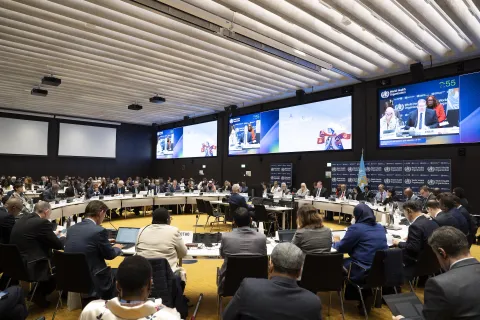
The 158th session of the WHO Executive Board (EB158) convened during what WHO Director General Dr Tedros, in his opening remarks, described as “undeniably one of the most difficult years in our Organization’s history.” Over five days, Member States were asked to do more with less: 53 agenda items were considered within a shorter timeframe and with briefer interventions than at previous EB sessions, and issues had to be considered in the context of shrinking financial resources. These ranged from follow-up on the political declaration of the fourth UN High-Level Meeting on Noncommunicable Diseases (NCDs) and Mental Health, to primary health care (PHC), the economics of health for all, WHO reform and the future of the global health architecture (GHA).
Discussions reflected both urgent health priorities and an evolving multilateral landscape, shaped by tightening budgets, geopolitical divides, including tensions related to Iran, and the implications of Argentina’s withdrawal. These dynamics unfolded alongside acute humanitarian crises in the occupied Palestinian territory and the war in Ukraine, while gender and reproductive health issues continued to reveal persistent divides among Member States.
Time to reflect on the new Political Declaration on NCDs
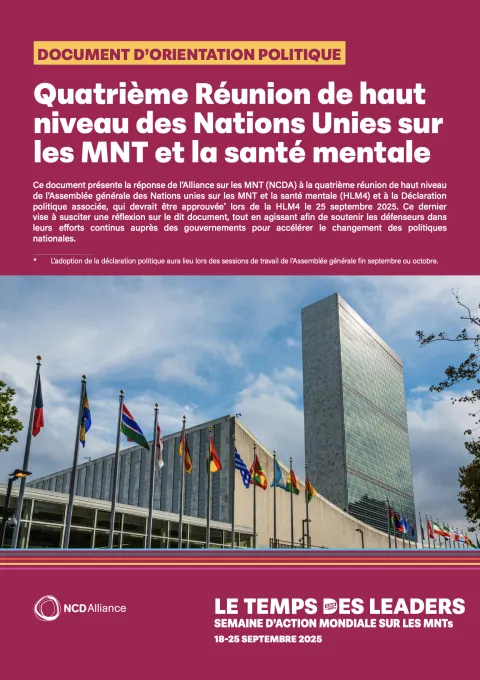
EB158 marked the first global health gathering since the UN General Assembly adopted the Political Declaration on NCDs and Mental Health last December, and requested for WHO to report on progress until 2031. The discussion provided an early opportunity to reflect on how to operationalize commitments and align new and measurable targets, including on mental health, tobacco control, and hypertension. While the declaration was adopted by majority vote in New York, many delegations emphasised that real consensus will ultimately be measured through its implementation. Under this agenda item, two new documents on steatotic liver disease and blood disorders were adopted for consideration at the 79th session of the World Health Assembly (WHA79). These documents call for integrating considerations around these conditions in NCD plans and broader health strategies.
However, concerns emerged regarding alcohol being primarily addressed under the mental health agenda item rather than within the core NCD discussion as well, raising questions about fragmentation in tackling common risk factors and their underlying commercial determinants. Financing the NCD response also remains a major barrier to implementing the Political Declaration, as the NCD Alliance underlined in its constituency statement. Further discussions are expected on this matter in the lead up to the 3rd WHO International Dialogue on Sustainable Financing for NCDs and Mental Health, taking place in Manila from 2-4 September 2026.
Global health architecture reform took centre stage
In the context of growing pressures, reform of global health architecture was at the center of discussions, not only during its dedicated agenda item, but throughout the week. As outlined by Dr. Tedros in his opening remarks: “There are now many discussions on reforming that ecosystem to ensure all partners leverage their comparative advantage, avoid overlaps and duplication, and that together we deliver value and results for the countries we serve.”
The Board and Member States acknowledged the need for alignment, given the number of different initiatives, and broadly supported a decision for WHO to propose at WHA79 "a joint, inclusive, transparent, time-bound, resource effective and efficient process, hosted by WHO, which is led by Member States, that brings together and complements current global health architecture and UN80 discussions to facilitate convergence and consensus-building".
NCD Alliance emphasised the importance of ensuring meaningful civil society participation in the process. To this aim, the Health Architecture Reimagined (HEAR) CSO initiative was formed last year, and is currently collecting insights through a global survey, which is open until 28 February. The findings will inform the development of a joint proposal to be presented at the World Health Assembly this May. It also underscored that NCDs must be fully integrated into these discussions, given that they represent a substantial share of the global burden of disease yet lack dedicated global institutions and financing mechanisms, leaving them especially at risk of being overlooked.
Economics of health for all, a transformative new strategy
Member States discussed the WHO's new Economics of Health for All strategy, which aims to place health and wellbeing at the centre of economic goals and policies. Member States highlighted concrete cross-sector policy levers to advance this agenda, including fiscal measures, with Barbados underscoring the role of health taxes on tobacco, alcohol, and sugar-sweetened beverages to address the NCD pandemic and contribute to economic growth.
Countries including Brunei, the Central African Republic (on behalf of the African Region), Indonesia, Lebanon (on behalf of the Eastern Mediterranean Region), Spain, and Thailand reiterated the need to recognize health as an investment in our societies and economies, rather than as a cost. This framing is particularly relevant for NCDs, which drive catastrophic health spending and are projected to cost the global economy US$47 trillion between 2010 and 2030, despite the availability of proven, cost-effective interventions for their prevention, treatment, and care. (See NCD Alliance’s constituency statement on this item)
Providing health through primary healthcare
Member States reaffirmed the importance of Universal Health Coverage as a key driver to advance global health and development agendas. Alongside this commitment, four resolutions were adopted on pharmacovigilance, precision medicine, teleradiology, and reducing the burden of stroke. This year, PHC had its own stand-alone agenda item, underscoring WHO’s intention to focus on its core mandate and to position PHC as the foundation of resilient, equitable, and people-centred health systems.
Many countries stressed that strong PHC remains the pillar of national health systems and is indispensable to ensuring continuity of care, particularly in crisis and fragile contexts. Discussions also brought renewed attention to systemic barriers that continue to undermine PHC delivery. Member States pointed to the COVID-19 pandemic, climate-related emergencies, and the rising burden of NCDs as evidence of the critical role PHC plays in responding to public health threats. As the NCD Alliance recalled in its constituency statement, integrating NCD services into PHC remains essential, as NCDs are the leading cause of disability and death globally.
Remaining budget questions
Dr Tedros outlined the current state of WHO’s financing, noting that the Organization has secured 85% of its 2026–2027 base budget, thanks to the multi-year increases in assessed contributions to strengthening WHO’s pool of predictable funding. [1] Yet significant structural challenges remain. Most voluntary contributions continue to be earmarked, creating persistent “pockets of poverty” across key priority areas, including emergency preparedness, antimicrobial resistance, health financing, climate resilience, and the social and commercial determinants of health.
Looking ahead
As in previous years, this February's Executive Board session set directions on the issues likely to shape the global health agenda for the coming year. While WHO’s role and operating context are evolving, Member States reiterated expectations for the Organization to provide leadership and maintain space for multilateral dialogue. Looking ahead, attention now turns to the next milestones, from continued negotiations on the Pathogen Access and Benefit-Sharing (PABS) to preparations for the World Health Assembly, and to how Member States will deliver on commitments made in the Political Declaration on NCDs and Mental Health.
[1] Member States agreed in 2022 at the World Health Assembly on a plan to raise assessed contributions to 50% of the base budget, up from just 14% at the time.
Mina Pécot-Demiaux joined the NCD Alliance Policy and Advocacy team in January 2025 as the Policy and Advocacy Officer to support the work of the global policy team, with a particular focus on Care, from Primary Health Care and UHC to the integration of NCDs into other global health priorities. After gaining early experience in Geneva, where she contributed to projects supporting access to healthcare for the most vulnerable communities in Kabul, she began her career in Brussels within non-governmental organisations and European institutions, focusing on issues related to development, global health, and climate financing