
SPARK–NCD launch in Zanzibar highlights momentum for integrated HIV-NCD care in Africa
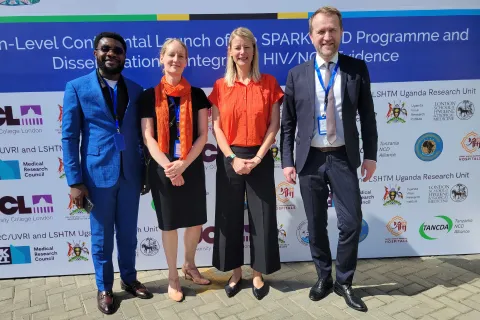
The launch of SPARK-NCD and the dissemination of new HIV-NCD integration evidence in Zanzibar this week reinforced a clear message: the case for integrated care in Africa is established, and the task now is implementation at scale.
Held in Zanzibar on 27–28 March, the High-Level Continental Launch of the SPARK-NCD Programme and Dissemination of Integrated HIV/NCD Evidence brought together regional leaders, governments, researchers and civil society to explore a more integrated response to HIV and NCDs in Africa.
Over two days, speakers returned repeatedly to a shared message: health systems can no longer afford siloed approaches to chronic conditions. At a time of growing pressure on health financing, the meeting reinforced the need to move beyond fragmented responses and towards more integrated, sustainable models of care.
Against that backdrop, Africa CDC presented the new SPARK–NCD Programme as a step towards stronger NCD responses across 11 countries in East and Southern Africa. The initiative focuses on surveillance and health workforce development while avoiding the creation of parallel systems. It reflects a wider push to move from regional policy discussions to country‑led implementation at scale, grounded in data and strong primary health care.
NCD Alliance CEO, Katie Dain, spoke on both the case for HIV–NCD integration and the role of civil society in tackling NCDs in Africa. She highlighted rising multimorbidity as people living with HIV live longer, and the need for integrated chronic care anchored in primary health care. She also emphasised the importance of civil society as a core partner in advocacy, awareness, accountability and access.

“As people living with HIV live longer, many are also living with multiple chronic conditions — and that means HIV-NCD integration has to be a priority. Coordinated chronic care through strong primary health care is not only more equitable, but also more practical and sustainable.”
Emerging evidence presented at the meeting also strengthened the case for action. The INTE-COMM trial, a multi-country study in Tanzania and Uganda published in The Lancet in March 2026, provides some of the strongest evidence yet that community-based care for people living with HIV, diabetes and hypertension can maintain high-quality care without compromising outcomes, offering proof of concept for scaling integrated care across the region.
Participants also stressed the need for health systems that treat the whole person rather than one condition at a time, and that translating evidence into implementation will require not only technical guidance but also strong partnerships, inclusive governance and meaningful community engagement.
Building momentum ahead of the 2026 HIV HLM
The meeting took place in a broader context of growing African political momentum on NCDs and integrated care. Recent developments include Africa CDC’s Health Security and Sovereignty Agenda and the adoption by African Heads of State of an African Union Common Position on NCDs, injuries and mental health. These are important signals of stronger regional commitment and a clearer policy framework for action.
For NCD Alliance, the discussions in Zanzibar reinforced the case for integrated, rights-based and people-centred care, and the vital role of civil society and community-led organisations in advancing it. NCDA’s recent advocacy tools, co-developed with HIV organisations and networks, underline the importance of partnership and shared ownership.
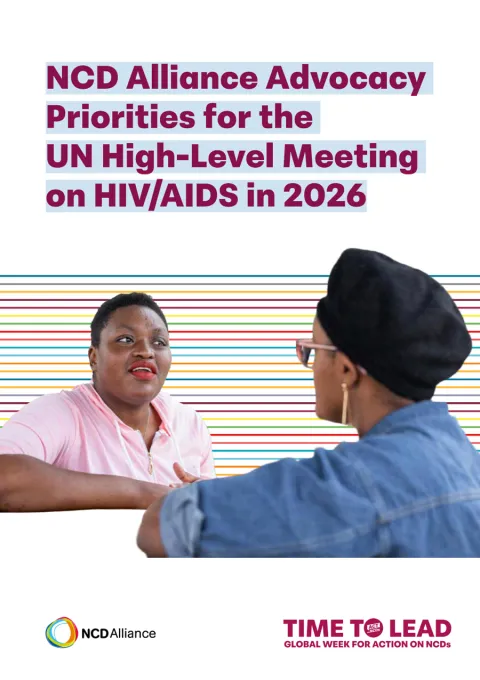
These include a new toolkit on advocating for integrated HIV, NCD and mental health responses, and a policy brief outlining NCDA’s priorities for the 2026 UN High-Level Meeting on HIV/AIDS. Together, they are designed to support advocacy for stronger political commitments on integrated care.

The message from Zanzibar was clear: the case for integration is established. The task now is implementation at scale through strong primary health care, country leadership and sustained partnership.