NCDs and the Future of Global Health Architecture
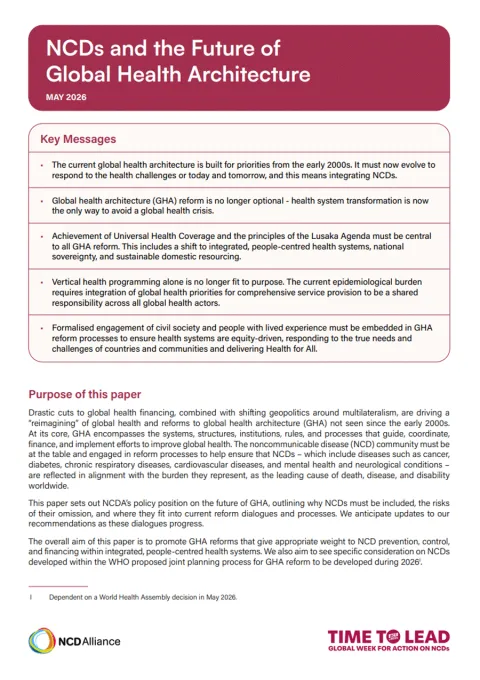
The global health landscape is undergoing rapid change. Drastic cuts to global health financing, shifting geopolitics and renewed debates on multilateralism are driving a 'reimagining' of the global health architecture not seen since the early 2000s.
This paper sets out NCDA’s policy position on the future of global health architecture. It outlines why NCDs must be included, the risks of their omission, and where they fit within current reform dialogues and processes. As these discussions evolve, NCDA anticipates updating its recommendations.
The paper aims to promote reforms that give appropriate weight to NCD prevention, control and financing within integrated, people-centred health systems. It also calls for specific consideration of NCDs in the WHO proposed joint planning process for global health architecture reform, expected to be developed during 2026.
Key Messages:
- The current global health architecture is built for priorities from the early 2000s. It must now evolve to respond to the health challenges or today and tomorrow, and this means integrating NCDs.
- Global health architecture (GHA) reform is no longer optional - health system transformation is now the only way to avoid a global health crisis.
- Achievement of Universal Health Coverage and the principles of the Lusaka Agenda must be central to all GHA reform. This includes a shift to integrated, people-centred health systems, national sovereignty, and sustainable domestic resourcing.
- Vertical health programming alone is no longer fit to purpose. The current epidemiological burden requires integration of global health priorities for comprehensive service provision to be a shared responsibility across all global health actors.
- Formalised engagement of civil society and people with lived experience must be embedded in GHA reform processes to ensure health systems are equity-driven, responding to the true needs and challenges of countries and communities and delivering Health for All.