A Mandate for Action: Governments unite on NCDs and Mental Health despite a challenging and changing global health landscape
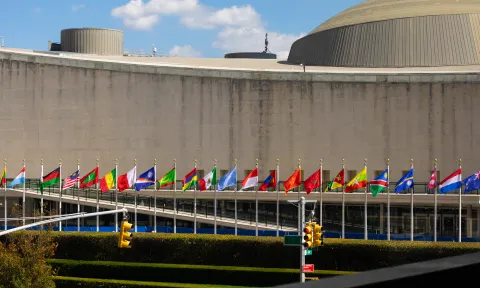
Two years ago, following the High-Level Meeting (HLM) on Universal Health Coverage (UHC), we reflected on the growing political challenges that multilateral processes were facing, with negotiations often overshadowed by geopolitical tensions. Against that backdrop, this year’s Political Declaration on Noncommunicable Diseases (NCDs) and Mental Health represents a significant achievement: the vast majority of governments reaffirmed and strengthened their political commitment to accelerate action on NCDs and mental health.
This renewed commitment, achieved despite the complex dynamics in navigating the US position on NCDs and the multilateral system, underscores the widespread recognition that NCDs and mental health are critical to achieving the Sustainable Development Goals (SDGs) and to advancing health, equity, and resilience in every country. NCDA welcomes the new Political Declaration for its renewed commitments, particularly the adoption of a set of targets, and calls for governments to translate it into tangible action at the national level, where progress ultimately matters most.
As we highlighted throughout our advocacy in the lead-up to and following the HLM, words alone are not enough. The true test of political commitment lies in delivery – in integrating NCD and mental health responses into universal health coverage, ensuring sustained financing, protecting people from health-harming industries, and fostering environments that support wellbeing for all.
As NCDA emphasized during UN High-Level Week, the Political Declaration is the floor, not the ceiling. During the HLM itself, governments demonstrated that in their individual capacity, they are ready to tackle issues around commercial determinants of health, conflicts of interest, and implement evidence-based, cost-effective measures on prevention. NCDA appreciates and welcomes the leadership and commitments that these governments have pledged to take, despite the watering down of these commitments in the text, which was a key focus of many of NCDA’s concerns about the Political Declaration.
The negotiations of this Political Declaration revealed familiar tensions, myths, and misconceptions, and showed that political and economic interests often took precedence over evidence-based solutions, reflecting how deeply the NCD agenda is intertwined with multisectoral issues of trade and industry influence. Member States also negotiated in blocs based on similar economic and financial interests (Second Committee) rather than shared priorities for development and human rights (Third Committee), so we can assume that the voices of health champions were overruled in blocs like the G77+China in favor of supporting entrenched industry interests within Member States where national economies are closely linked to health harming industries (e.g., fossil fuels, tobacco and alcohol production), thereby diluting the text, rather than pledging action that centers health and human rights.
While the negotiating blocs may have weakened the ambition of the declaration, this process further demonstrates why key reports and work within the WHO system, such as the Economics of Health for All agenda, must be socialized across government agencies. In a world of constrained resources, addressing NCDs requires a reimagined approach to health and economic policy that prioritizes healthy populations as a foundation for sustainable growth.
Despite these challenges, the overall outcome remains encouraging. The global community has once again come together to reaffirm that NCDs and mental health are central to the future of sustainable development. This is a moment to build on, and the declaration serves as a platform for us to continue to accelerate action, break down silos, mobilize financing, deliver accountability, and engage communities.
With the next HLM on UHC approaching in two years, we have another vital opportunity in the SDG era to ensure that NCD and mental health commitments are being realized and advanced in a way that takes us into the post-2030 agenda. NCDA will continue to call for cohesive and coordinated action to ensure that the promises made in New York translate into healthier, more equitable societies everywhere.