
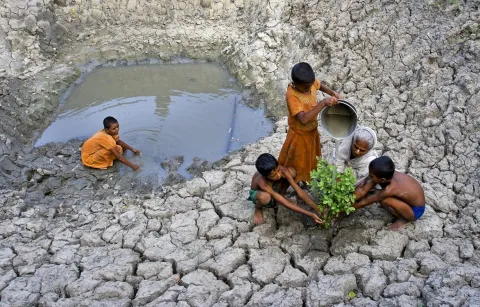
“Climate change affects us all, but it does not affect us all equally. Those who are least able to cope are being hit hardest” - Ban Ki-moon, 2013
NCDs and climate change are intrinsically linked, and as such can be addressed in tandem. Key areas for co-benefit action exist across energy production, transport systems, and food systems. These sectors are leading sources of emissions which contribute to air pollution and global warming. Outdoor air pollution alone is responsible for 3.7 million deaths annually, due to cancer, respiratory disease, and cardiovascular disease. Emissions can be reduced through transitioning from fossil fuels to renewable energy, promoting active transport such as walking and cycling, and enabling access to locally produced, unprocessed, plant-based diets. These latter two interventions also serve to combat physical inactivity and poor nutrition.
Notably, urban areas frequently serve as a nexus of activities across these areas, offering widespread opportunities to intervene, and with high populations in a concentrated area who can in turn benefit from the impacts of policies and programmes implemented.
Indoor and outdoor pollution impact directly on mortality from respiratory disease, cardiovascular disease and cancer, and interventions such as promotion of active transport and sustainable food systems contribute to prevention of all major NCDs through reducing physical inactivity and poor nutrition.