Tobacco use

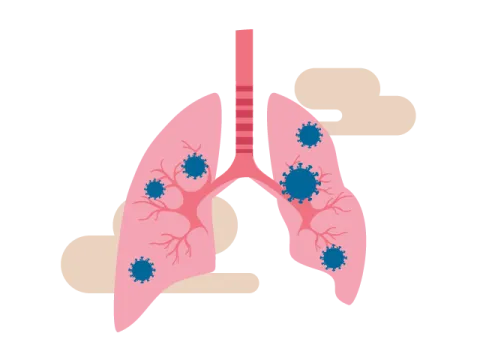
Tobacco kills more than any other preventable cause of death in the world. More than eight million people die every year from a tobacco-related disease, mostly from NCDs such as cardiovascular diseases, chronic respiratory diseases, cancer or diabetes.

Key facts

Smoking: a very deadly habit 

There are more than 1.3 billion smokers around the world, with 80% of them in LMICs. Half of them will die from a tobacco related disease, mainly NCDs.

Uneven progress on tobacco control 

Smoking prevalence worldwide has declined by 27% for men and 38% for women since 1990. However, there’s been little decline in most LMICs.

Big tobacco keeps fighting 

Fearful of losing profits as knowledge of smoking risk grows, the tobacco industry has responded in a forceful manner to open up new markets and exploit regulatory loopholes.
What's the problem with tobacco?

Tobacco products cut millions of lives short each year, cost trillions to the economy, are key drivers in the climate and food crises, and widen socioeconomic disparities. 

Considerable progress has been made to limit this powerful industry – smoking prevalence worldwide has declined by 27% for men and 38% for women since 1990 – but this comes too long after 1950s research officially established cigarette smoking as a major cause of death. And there is much more work yet to be done - there has been little decline in smoking in most LMICs, and the tobacco industry is targeting the next generation with new products and new lies to accompany them. 

Decades of deceit by the deadly and destructive tobacco industry has, however, taught governments some hard-earned lessons. They will not un-do the damage done by tobacco, but they can steer decision makers towards protecting populations rather than protecting the profits of other health-harming industries like alcohol, fossil fuels, and junk food.

A major driver of the NCD burden
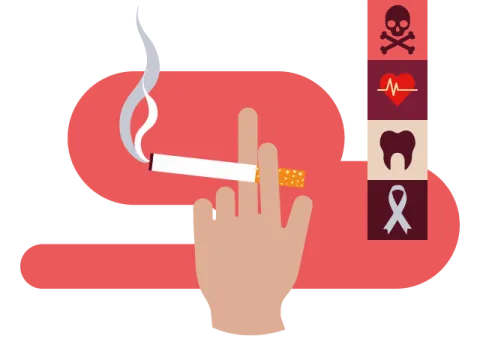
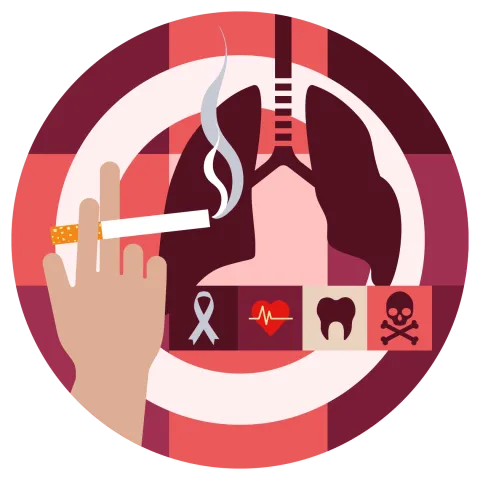
Tobacco is a key risk factor for all of the 'big 5' noncommunicable diseases.
NCD Diaries
"I was diagnosed with chronic obstructive pulmonary disease from my more than 30 year addiction to tobacco ten years ago. I participate as an ex-smoker raising my voice so that more people stop smoking and fewer young people start their addiction to nicotine."
Jaime Barba, lived experience of chronic respiratory disease, Mexico
Read Jaime's NCD diary
Why is it urgent to act against tobacco?
Despite progress in tobacco control, the tobacco industry remains very strong. These are some of the areas where it is important to remain vigilant:
Indian girl with quit tobacco paint on face

Tobacco industry targeting kids 

Internal tobacco industry documents show that tobacco companies have long considered children and youth to be “replacement smokers”, and critical to sustaining their business and the future of their brands. Since regulations on tobacco marketing have become much stricter in many countries, the tobacco industry has changed tactic with new tobacco and nicotine products like e-cigarettes, ‘snus’, nicotine pouches and heated tobacco products. 

While these products are often promoted as cessation alternatives for adults, there is growing concern that their marketing—including the use of sweet flavours, colourful packaging, and digital media tactics—may appeal disproportionately to young people. 

Evidence from multiple contexts suggests these products are being promoted through channels and strategies that reach youth, including social media, entertainment content, and environments not covered by existing tobacco marketing restrictions.

Production and consumption of tobacco make a major contribution to global warming and the resulting extreme weather events, releasing 80 million tonnes of carbon dioxide, the main greenhouse gas, into the environment each year. 

This is equivalent to the average annual driving of 17 million gasoline-powered cars. Tobacco smoke itself releases more particulate matter than diesel exhaust. And tobacco farming also accounts for about 5% of total deforestation, with devastating effects on the climate as well as ecosystems..

A record 349 million people are facing acute food insecurity. Meanwhile, tobacco takes up 3.2 million hectares of fertile land that could be used for healthy crops. Production uses about 22 billion tonnes of water each year - far more than most food crops. 

For every kilogram of tobacco that is not produced, the drinking water needs of one person can be met for an entire year. Since 2005, the area under tobacco cultivation decreased globally by 15.8%, while in Africa it increased by 19.8%.

Since the 1950s the tobacco industry has literally had a playbook for influencing policymakers. The script adapts to new science and changing public opinion, but the tobacco industry is consistent in taking advantage of knowledge gaps to spread misinformation. 

As awareness of tobacco harm grows, it aims to be perceived as a legitimate partner in tobacco control, introducing new “less harmful” products while trying to push regulation back. This is especially true for less tapped markets in LMICs.

Take a deep dive
Solutions Tobacco control for healthier populations
It is more important than ever to continue strengthening controls to counter big tobacco's deadly offensive.

Raising taxes on tobacco products is a well-established strategy to reduce consumption. Regulatory approaches for newer nicotine delivery products are still evolving, especially in response to youth uptake.

Prohibiting all forms of tobacco advertising, promotion, and sponsorship helps reduce the attractiveness and social acceptability of tobacco use.

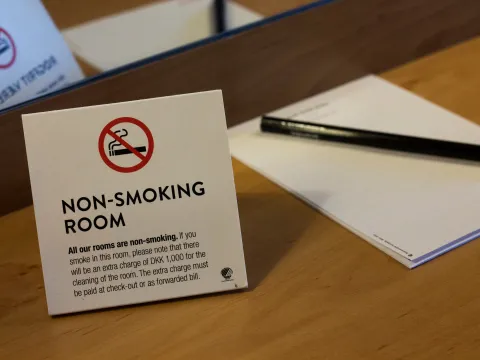
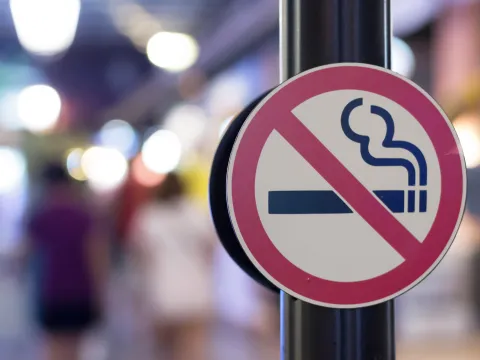
Enforcing bans on smoking in public places, public transport and workplaces reduces tobacco use and also protects non-smokers from secondhand smoke.

Launching mass media campaigns to inform the public about the dangers of tobacco use and the benefits of quitting is one of the most effective ways to counter the tobacco industry.

There are more than 250 harmful chemicals in tobacco smoke and 69 are cancer causing. Limiting or prohibiting these substances in tobacco and nicotine products reduces health risks.

As awareness of smoking danger increases, the tobacco industry has developed new products such as vapes and heated tobacco products, which are frequently promoted in ways that appeal to youth. These trends have raised concern globally about increased nicotine exposure and dual use among young people. Policies must protect against these products to avoid a ‘next generation’ of tobacco harm.

Share options: