
35 ministries unite for NCD prevention and control in Bangladesh
Noncommunicable Diseases (NCDs), including heart disease, cancer, diabetes, chronic respiratory diseases, and mental health disorders, are estimated to cause 71% of all deaths in Bangladesh, and over half of these occur before the age of 70. NCDs become visible in the health sector, but many of the drivers and determinants of preventable NCD morbidity and mortality originate in sectors such as education, transport, trade and commerce, agriculture and food, environment, and urban planning.
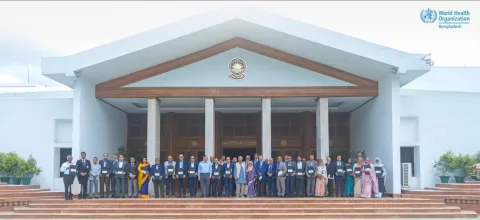
Recognising this, 35 ministries from the Government of Bangladesh have come together beneath a Joint Declaration for the integrated prevention and control of NCDs, committing to a “health in all policies” approach to ensure that health - and particularly NCDs - are considered and prioritised across all sectors of government. Each ministry – including the Ministry of Health and Family Welfare; Ministry of Finance; Ministry of Education; Ministry of Agriculture; Ministry of Food; Ministry of Local Government, Rural Development and Co-operatives; Ministry of Environment, Forest and Climate Change; Ministry of Youth and Sports; and Ministry of Road Transport and Bridges, among others – will implement the national multi-sectoral action plan for the prevention and control of NCDs in coordination with the Ministry of Health and Family Welfare (MOHFW) to ensure harmonized action and results. Ministries will regularly review, monitor, and publish reports on progress, promoting transparency, accountability, and evidence-based course correction where needed.
Among the key elements of the Declaration is the commitment to mobilise financial and human resources to scale up proven, cost-effective interventions for tobacco control, healthier diets, and promotion of physical activity [i.e. the World Health Organization’s (WHO’s) best buys]. The government will also roll out nationwide awareness campaigns on NCDs and NCD prevention while encouraging community and civil society participation.
NCDs in Bangladesh – as in all countries around the world – are not just a medical challenge and a strain on health systems, they are a socioeconomic threat, worsening poverty, widening disparities, and impeding national development. Approximately 70% of healthcare costs are paid out-of-pocket in Bangladesh, often leaving households afflicted by chronic disease further burdened by severe financial hardship, with deep and far-reaching effects that extend far beyond health.
Despite growing consensus that a ‘health-in-all-policies’ approach involving all sectors of government is essential for an effective NCD response, few countries have fully implemented one. Bangladesh is among those driving a paradigm shift in approach to tackling NCDs. The country’s Joint Declaration represents a transformative model for multisectoral collaboration that other governments can adapt to their own local contexts. This bold initiative underscores that NCD prevention is not only a health issue but also a development, equity, and sustainability issue. By embedding NCD prevention into policies spanning food systems, urban development, education, taxation, and social protection, the country is setting an important example, particularly for other LMICs.
The WHO has been a key partner in Bangladesh’s NCD response, including the Joint Declaration, by providing technical guidance and supporting integration of cost-effective interventions into primary care.
An Advocacy Win for Civil Society
For the Bangladesh NCD Forum (BNCDF)* and its partners, the Joint Declaration is not just a policy milestone but also an advocacy win. The BNCDF has long championed the inclusion of civil society voices in decision-making and has worked to build evidence, mobilise communities, and call for stronger accountability on NCDs. This commitment from 35 ministries validates years of advocacy and provides a new mandate for collaboration.
*BNCDF is a non-profit, non-political platform established in 2009 that unites health experts, professionals, and organizations to advocate for and advance the prevention, control, and policy reform of NCDs in Bangladesh, while engaging nationally and globally through partnerships with leading health alliances. Through its partnership with Resolve to Save Lives, the NCD Alliance supports BNCDF in strengthening its capacity to eliminate industrially produced trans fatty acids (iTFAs) from Bangladesh’s food supply via stakeholder mapping, partnership building, laboratory capacity enhancement, local evidence generation, and public awareness raising of iTFA-related health risks.
NCDA thanks Ummay Ferihin Sultana, Secretariat Coordinator for Bangladesh NCD Forum and for South East Asia Regional NCDA (2023-2024); and Shamim Hayder Talukder, Member Secretary for Bangladesh NCD Forum and Immediate Past Chairperson, South East Asia Regional NCDA (2023-2024) for their contributions to this article.