
Investing in the health workforce is a pillar of accountability
In the wake of the fourth UN High-Level Meeting on NCDs and Mental Health (HLM4), we’ve been reflecting on a simple but urgent truth: we cannot deliver on global commitments to reducing noncommunicable diseases (NCDs) without investing in the people who make care possible.
At the American College of Cardiology, we see the health workforce not just as a component of health systems, but as the backbone of accountability. If countries are to deliver on their commitments made in the HLM4 Political Declaration, they must equip frontline providers, community health workers, and multidisciplinary teams with the tools, training, and support needed to translate policy into practice.
Through our global programmes, we’ve had the opportunity to work alongside partners in low- and middle-income countries to strengthen cardiovascular disease (CVD) prevention at the community level. One of the clearest lessons we’ve learned is that leadership on NCDs doesn’t only come from government ministries or global institutions, but already exists within communities. The challenge is recognising it, resourcing it, and scaling it.
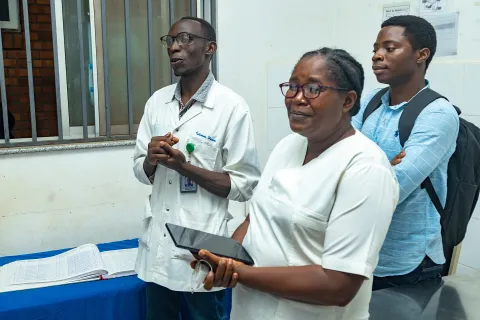
For example, in our work supporting community-based CVD prevention, we are developing a culturally relevant training curriculum for community health workers (CHWs) that will be rolled out across Rwanda. This initiative focuses on practical, locally adapted tools to improve early detection, risk assessment, and referral pathways. By investing in CHWs, who are often the first and only point of contact for many patients, we are strengthening the link between national NCD strategies and real-world implementation.
But this work is not without challenges. Health workforce shortages, limited training infrastructure, and fragmented care systems continue to slow progress. Too often frontline providers, especially CHWs, are asked to do more with less, without fair compensation, formal recognition, or the protections afforded to other health professionals. Despite playing a critical role in prevention, early detection, and patient trust, CHWs are frequently treated as informal extensions of the system rather than as essential, skilled members of the health workforce. These gaps are not just operational issues; they are failures of leadership and accountability.
Formally integrate CHWs into national systems
Closing the NCD leadership gap means addressing these realities head-on. It requires governments and partners to move beyond commitments and to invest in sustainable health workforce models that formally integrate CHWs into national systems — complete with standardised training, certification pathways, and, critically, fair and consistent pay. Accountability must go beyond counting policies adopted; it must include whether CHWs are compensated for their work, supported in their roles, and retained as professionals within the system. Only then can we ensure that patients receive continuous, high-quality care and that NCD commitments translate into real-world impact.
At ACC, we are working to align our efforts with broader global initiatives, including partnerships that integrate workforce training into city-level NCD programmes and national strategies. By collaborating across sectors, bringing together clinicians, public health leaders, and community stakeholders, we aim to create scalable models that can be adapted across diverse settings.
Importantly, we are also listening. The most effective solutions we’ve seen are those co-created with local providers and communities. Their insights shape not only what we build, but how we define success. This, too, is a form of leadership; one that is inclusive, grounded, and essential for long-term impact.
As the NCD Alliance’s Global Week for Action campaign continues to call for accountability, the role of the health workforce must remain central. Investing in people is not a secondary priority, it is the pathway to delivering on every promise made.
The commitments from the HLM4 are clear. Now, the question is whether we will match those commitments with the leadership, resources, and accountability needed to act.
From where we stand, strengthening the health workforce is one of the most tangible and powerful ways to close the gap.
Jennifer Bae is the Executive Director of Global Innovation for the American College of Cardiology. She oversees the global programmatic work and innovation investment portfolio. Her prior work experience includes global health capacity building for the State Department, CDC and academic organizations; US hospital and health system consulting for the Advisory Board Company; and work with public payors. She holds MHSA and BS degrees from the University of Michigan and has language skills in Spanish, Bahasa and Mandarin.
Kasey Fizer is a global health professional specializing in partnerships and advocacy at the American College of Cardiology. In her role, she collaborates with international program teams and philanthropic partners to implement health initiatives around the world. Her background spans outreach and development for a rural community health clinic in West Virginia, community health programming with Roma populations in northern Romania, and humanitarian support for displaced Ukrainians during the war in Ukraine. She holds an MPH from East Tennessee State University and a BS from Marshall University.