Fifth Multistakeholder Gathering highlights need to strengthen financing, governance for NCDs and mental health response

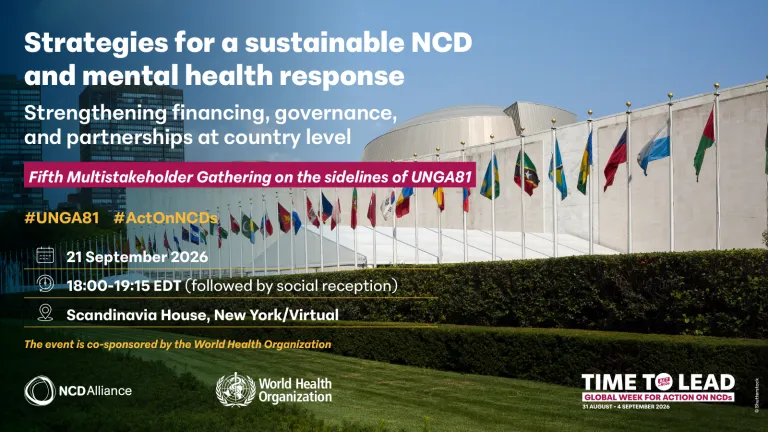
Against a backdrop of shrinking fiscal space and major reforms to the global health architecture, diverse stakeholders came together on the sidelines of UNGA High-Level Week to explore how to strengthen the NCD and mental health response — and turn commitments into sustained action and impact.
Co-hosted by NCD Alliance and the World Health Organization (WHO) through the Global Coordination Mechanism on NCDs, with financial support from the Novo Nordisk Foundation to facilitate logistics, the fifth Multistakeholder Gathering featured perspectives from Bangladesh, Brazil and Kenya, alongside reflections from WHO, civil society and private philanthropy.
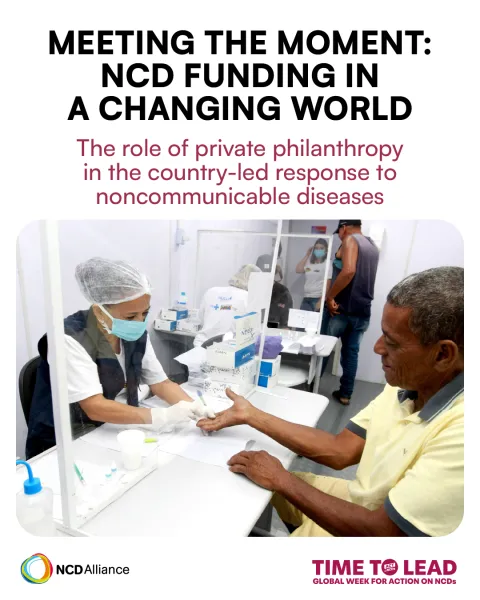
The event, Strategies for a sustainable NCD and Mental Health response: Strengthening financing, governance, and partnerships at country level, also marked the launch of NCD Alliance’s newest resource, Meeting the Moment: The Role of Private Philanthropy in the Country-Led NCD Response, made possible with financial support from the Novo Nordisk Foundation.
Moderator Mary-Ann Etiebet, President and CEO of Vital Strategies, opened the discussion with a question that set the tone for the session: “How do we galvanise multisectoral action? What can we do differently every day to build a sovereign, scaled, sustainable and stronger NCD response? How do we do it — and, importantly, who do we do it with?”
Setting the scene: Collaboration amidst global health shifts
Leslie Rae Ferat, President of the NCD Alliance, highlighted the significance of the ongoing reform of global health architecture – the system of actors, institutions and rules that shape health worldwide.
“These reforms are being driven in part by funding cuts and a recognition that the current system is too bloated, fragmented, donor-driven, and out of sync with todays and future global health challenges – particularly NCDs and mental health,” she said.
She highlighted the opportunity for these reforms to drive country-led health systems, grounded in national burdens and priorities, in which NCDs and mental health must be central. Achieving these systems will require meaningful participation from civil society and lived experience advocates, to ensure equitable systems that meet the needs of the communities they serve, alongside broad multistakeholder collaboration.
National responses: where commitments become impact
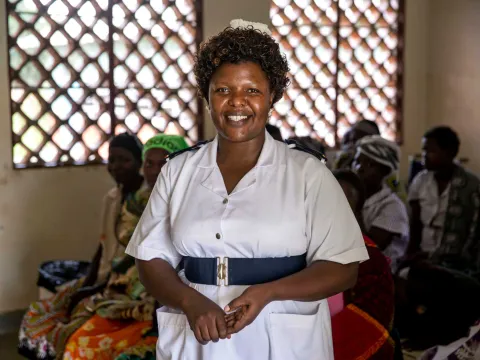
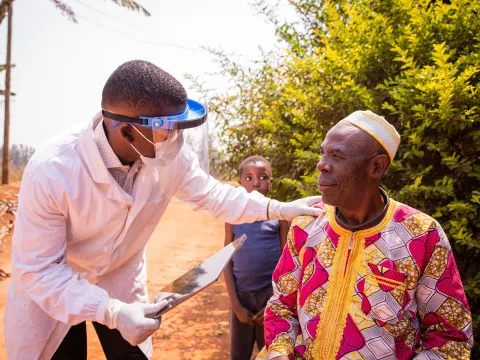
Dr. Md. Shamim Hayder Talukder, Technical Advisor to the Ministry of Health of Bangladesh, shared a country perspective on Bangladesh’s joint declaration for the integrated prevention and control of NCDs. The declaration commits to a “health in all policies” approach, including a role for Bangladesh’s community health workforce in delivering NCD care.
“Adopting a policy is only the beginning. The real success comes when it is backed by investment and implementation —and translates into meaningful change for people,” he said.
Flemming Konradsen, Chief Scientific Officer of Novo Nordisk Foundation, reflected on the role of private philanthropy in supporting country-led implementation, integrating NCDs into existing health infrastructure, and avoiding the creation of parallel structures or further fragmentation.
“From a philanthropy perspective, we strongly favour integrating NCD prevention and care into existing systems and structures, rather than creating new ones. This helps build on what is already working and supports more sustainable, joined-up approaches.”
The central role of civil society and communities
Meaningful participation was a central theme throughout the discussion. Paula Johns, Co-founder and Executive Director of ACT Health Promotion in Brazil, shared lessons learned on building successful collaborations between civil society and government, including the importance of developing strong partnerships with people in technical roles within governments.
“Civil society also has a vital role in sustaining good policies when governments change. Keeping policies and commitments on track, and ensuring that progress is not lost with political transitions, is one of the key roles of CSOs,” she said.
She also highlighted the need for putting formal social participation mechanisms in place, pointing to Brazil’s resolution on social participation as an example of how this can work in practice.
Prisca Githuka, Member of the Our Views, Our Voices Global Advisory Committee, cancer advocate and founder Pink Hearts Cancer Support Foundation in Kenya, continued the discussion by noting the distinction between meaningful participation and tokenism.
“Meaningful engagement means influence,” she said. “If we invite people living with NCDs into a process without giving their voices a genuine opportunity to influence decisions, we are not truly engaging them.”
She stressed the need to track influence – whether the participation of people living with NCDs shaped policy, and ultimately whether those changes made a difference in their lives.
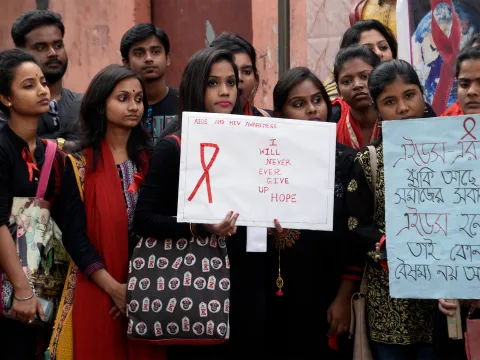
The importance of meaningful participation of people with lived experience featured prominently in the audience Q&A session, with particular attention to the meaningful engagement of people living with mental health conditions, as well as displaced people and those living in emergency settings.
Prevention, commercial determinants, and private sector engagement
The discussion also turned to the role of private sector and the need for clear rules to govern their engagement in the NCD response. Dr Bruce Aylward, Assistant Director-General (ADG), Division of Prevention, Promotion and Care at WHO, reflected on the challenges of private sector engagement in multisectoral action.
“Addressing NCDs requires multisectoral governance and the courage to tackle difficult issues. We have to be prepared to engage with issues such as the commercial determinants of health and to create the conditions for meaningful action across sectors.”
The way forward: integrated care, domestic resources and multistakeholder collaboration
Closing the session, Dr Aylward highlighted three major shifts in global health that are particularly relevant to the NCD agenda: the renewed push for primary health care; the need for greater investment in NCDs, led by governments through stronger domestic resource mobilisation; and the importance of multistakeholder engagement, recognising that each actor has a different role to play.
NCD Alliance CEO Katie Dain added to his comments, reinforcing the role of people living with NCDs.
“Effective NCD responses depend on inclusive governance. People living with NCDs must have a meaningful place in decision-making, so that policies and programmes reflect the realities of the people they are intended to serve.”
These priorities solidify the central message from the gathering: building sustainable NCD and mental health responses will require stronger integration into health systems, greater and more sustainable investment, and governance approaches that bring governments, civil society, people with lived experience and other stakeholders together around national priorities.
Watch the event recording: