Global Summit for Eye Health: A Critical Moment for Vision, NCDs and Development
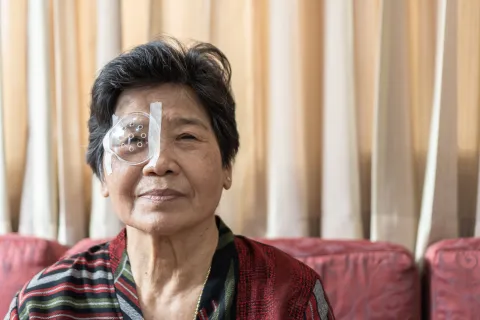
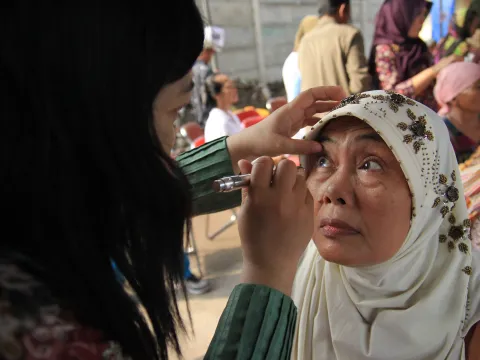
More than 2.2 billion people worldwide are living with blindness or vision impairment, including 1.1 billion people whose vision loss is preventable or yet to be treated. Without urgent action, that number is projected to rise to 1.8 billion by 2050. Vision loss is increasingly recognised not only as an eye health challenge, but as a critical component of the broader noncommunicable disease (NCD) and universal health coverage (UHC) agenda. Conditions such as diabetes are major causes of sight loss, while poor vision can undermine the prevention, management and outcomes of many NCDs.
Against this backdrop, the first-ever Global Summit for Eye Health, to be held on 2 November 2026, represents a landmark opportunity to transform the future of eye health. Hosted by the Government of Antigua and Barbuda and co-hosted by Bangladesh, Nigeria and Guyana with the WHO as a technical partner, the Summit will bring together world leaders, development partners, investors, NGOs and private sector representatives to secure ambitious commitments and accelerate progress towards reaching the 1.1 billion people living with avoidable sight loss.
The Summit comes at a critical juncture. While significant progress has been made through global commitments such as the World Health Assembly Resolution WHA73.4 on integrated people-centred eye care and the United Nations General Assembly's Vision for Everyone resolution, implementation and investment have not kept pace with need. The result is that millions of people continue to miss out on a service that is among the most effective and transformative investments in global health and development.
As highlighted by the NCD Alliance’s article, Caring for eye health within the NCD and UHC responses, eye health cannot be separated from efforts to prevent and control NCDs. Diabetic retinopathy remains a leading cause of avoidable blindness among working-age adults, while integrated screening and treatment services can improve outcomes for people living with diabetes and other chronic conditions.
Vision is fundamental to people's ability to learn, work, earn an income, care for family members and participate fully in society. Yet untreated eye conditions continue to reinforce cycles of poverty, inequality and exclusion, particularly in low- and middle-income countries. Poor vision reduces educational attainment, labour force participation and productivit. Women and girls are disproportionately affected, accounting for 55 per cent of the 1.1 billion people living with vision loss that could be prevented or treated.
This is why eye health is far more than a health issue. It is an NCD issue, a gender equity issue, an economic issue and a sustainable development issue. Improving vision contributes directly to healthier ageing, stronger health systems, better diabetes outcomes, increased workforce participation and progress across multiple Sustainable Development Goals, including health, education, gender equality, decent work and economic growth.
The road to the Summit is an opportunity for advocates and partners across the NCD community to champion integrated approaches that recognise the links between eye health, diabetes, healthy ageing, health systems strengthening and universal health coverage. By working together, we can help ensure that eye health is no longer overlooked in global NCD responses, and that commitments made in 2026 translate into lasting impact for millions of people around the world.
The NCD Alliance has already demonstrated its leadership by endorsing the St John’s Compact for Eye Health, the Summit’s global declaration to accelerate action and strengthen accountability on avoidable sight loss. Building on this momentum, organisations across the NCD and global health community are encouraged to add their support to the Compact and to sign the Equity in Sight Statement of Commitment, a global pledge to advance gender equity in eye health leadership, policy and practice. Together, these commitments can help drive more integrated, equitable and people-centred approaches to health, while strengthening progress towards NCD prevention and control, universal health coverage and the Sustainable Development Goals.