Reflections on WHA79: Why is the world still not well?
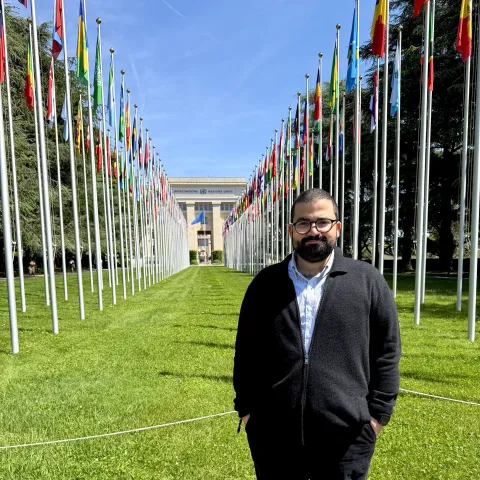
In the Allée des Drapeaux at the Palais des Nations in Geneva, I stopped for the cliché photograph almost everyone takes to mark their visit to the United Nations. Looking at the flags, I thought of what each represents: countries, millions of people, dreams and disappointments, completely different contexts, politics and healthcare systems. Yet they all share something fundamental: the human right to dignity and care.
At the end of that path are rooms with restricted entry, where decisions are made that can reach into millions of lives, lifting some up while leaving others behind. I wondered: if so many good decisions are made here, why is the world still not well?
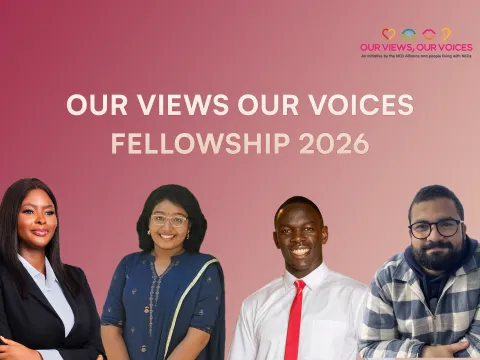
I did not leave Geneva with a neat answer, but my attendance at WHA79 as part of an NCD Alliance delegation through “Our Views, Our Voices” fellowship started to shape it.
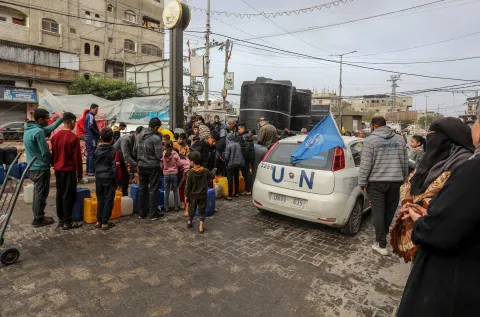
The rooms behind those flags do produce change, and in abundance. The harder truth is the distance between a good decision made in Geneva and the medicine that never reaches a shelf in countries affected by conflict, displacement, or economic instability. That distance, between written policy and implementation, is the gap I have not been able to ignore since.
For example, human insulin was included in the very first WHO Model List of Essential Medicines, the global guide that has helped more than 150 countries prioritise the most effective and affordable treatments since 1977. So why is it still not affordable, available, or accessible in many countries?
People with lived experience: Who gets to shape policies?
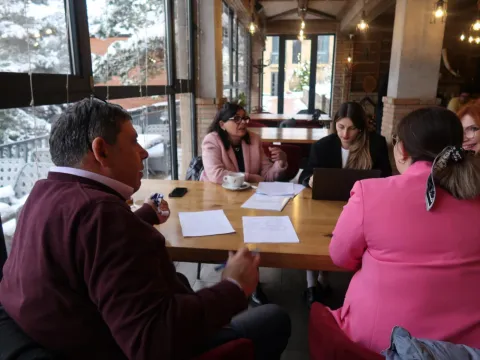
Global health spaces bring together governments, technical experts, and commercial representatives. Too often, what is missing is meaningful representation of people with lived experience. Even when they are in the room, they rarely enter it with equal power, resources, or access to the people setting the agenda.
Lived experience perspectives get treated so often as powerful stories to open a session, rather than as expertise that should shape the policy itself. Yet implementation lives or dies by this expertise: it grounds policy in the realities it claims to serve, and builds, alongside governments, the kind of decisions that hold up outside the room.
Representation: Who speaks, and who is spoken about?
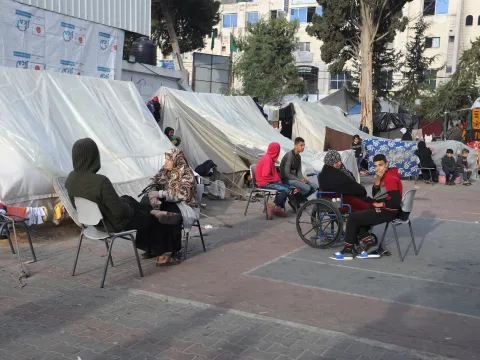
Are we sure that countries are heard equally? The states with the most resources and influence tend to be represented more fully and more often than those with less. The Middle East and North Africa (MENA) region suffers from a particular version of this: MENA is frequently treated as a single block, when in truth it spans completely different contexts each with different needs, among them zones of conflict and displacement. When a context is absent from decision-making, the policy written there reflects that absence. A framework that assumes stable supply chains, reliable electricity, and functioning systems reads well in Geneva and fails on the ground, not by intent but because it was based on a scenario that did not reflect reality.
Topic Selection: What gets left off the agenda?
Some of the most important subjects are either missing or blurred. Type 1 diabetes is the clearest example. Usually, the conversation is about "diabetes," as though type 1 and type 2 were one condition, when they are not. Type 1 is not preventable and can be fatal without insulin and constant monitoring. When that distinct, lifelong, non-negotiable dependency disappears into a general category, so does the urgency of acting on it.
Other subjects that matter deeply to patients on the ground are left out of the discussion altogether. Health technologies are one example. Tools that increasingly define good care, continuous glucose monitoring (CGM) among them, are rarely treated as the equity issues they are, and the conversation tends to assume a level of access that is absent across much of my region.
After the applause: What next?
Perhaps the quietest reason is what happens once a resolution is adopted. Commitments are made with real ceremony, and then too little attention is paid to whether they are ever carried out. Many countries have so little data it is impossible to even know whether a policy reached a single clinic, which makes accountability difficult. And without follow-up, even the best decision risks remaining a sentence on paper. As Dr Tedros said in his closing address, every resolution we adopt only has value when it changes what happens in a clinic, in a community, or in a household.
This year, I left Geneva with a renewed hope that change is possible, but only if we are willing to change the way these spaces work. The gaps I described require people with lived experience, particularly from underrepresented contexts, to enter these rooms, raise the questions that might otherwise be missed, and help reshape the decisions made within them.
The Our Views Our Voices fellowship is possible thanks to NCDA's partnership with The Leona M. and Harry B. Helmsley Charitable Trust.
Ali Hisham is an Egyptian writer, media and communications expert, and lived experience health advocate with extensive experience in campaigning, public engagement, and advocacy. He currently serves as Regional Advocacy Consultant for the Middle East and North Africa (MENA) at T1International.
Ali holds a Master’s degree in Media, Campaigning and Social Change from the University of Westminster, London. His work focuses on health equity, insulin affordability and availability, equitable access to diabetes care and technologies, and ethical health communication.
He has led successful advocacy initiatives on digital health rights and works to strengthen the meaningful involvement of people with lived experience in health policy and decision-making. Ali has received several prestigious recognitions, including: Chevening Scholarship, Lazord Fellowship, and the NCD Alliance’s Our Views, Our Voices Fellowship.